What We Learned From Pete Fortunato
My notes from Pete's Paper Course in December 2023, the ten lines I keep coming back to, and what Darryl took home from it.
By Alejandro Duque4 min read
FIRST PUBLISHED SEPTEMBER 2026; EDITED FOR WEB READABILITY.
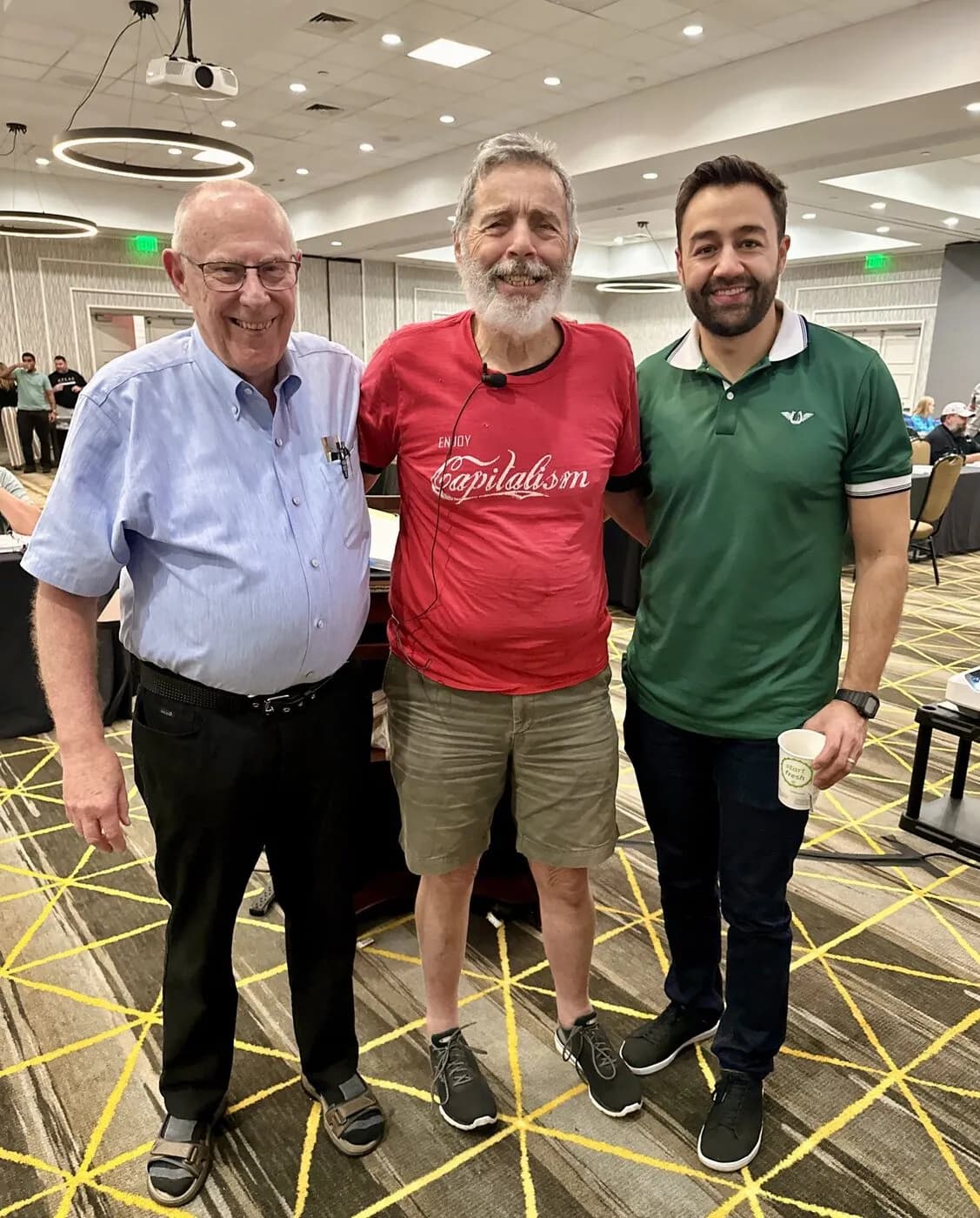
My head was still spinning a week after Pete Fortunato's Paper Course in December 2023, and in my opinion he's the smartest real estate investor I've ever met in person. Darryl had taken the class before and this was my first time, so I did what I usually do with a lot of new material: I went back through my notes over the next couple of days and posted my favorite lines as I found them. Almost two years later, those ten lines are still the ones I reach for when Darryl and I sit down with an owner, so here they are again, with a bit more of what they've come to mean to us than a post allowed.
Start with the goal, and play in the realm of right and wrong
Transactions which you can be proud of result from carefully conceived goals and plans, followed by purposeful actions and scrupulous documentation.
Remember to play in the realm of right and wrong, not legal and illegal.
Pete opened with these two, and I think they belong together. The order in the first one matters more than it looks: goals first, then a plan, then action, and the paperwork last, documenting what everyone agreed to. It's easy to do it backwards, starting from a contract and hoping a goal shows up. The second one is the standard we hold ourselves to. Plenty of things are legal that I still wouldn't want my name on, and when an owner is trusting us with a note or an exchange they'll be living with for years, legal isn't a high enough bar.
It's a people business
You can't dance with a property. You dance with the owners.
People need help or there's no deal.
There are no impossible deals. But there are impossible people.
We are in a people and relationships business, and Pete says it better than I ever have. The property doesn't decide anything. The owners do, along with everyone else at the table who needs to be happy for it to close, which is why the first conversation with us is about the owner and not the building. There's always a way to help, but you also need to know when you're facing an impossible person, and walk away.
Value is what the other person wants
Value is subjective, people like different things, and most of the time we're looking for different benefits.
Acquiring: Use what you WANT, to get what you NEED, to get what you WANT!
Divesting: Use what you HAVE, to get what you NEED, to get what you NEED!
It's inconvenient to be physically alive but financially dead.
The first line is the one I wrote the most about at the time, and the note I made still holds: when you're putting together a carefully conceived solution, think about what the benefits are if it closes, for you and for every person involved in the deal. Two owners with the same building can want opposite things, so the price is rarely the whole conversation. The second pair is the exchange room in two lines. You start with what you have (the property, the note, the land), you move it toward what you need, and sometimes that takes more than one step, which is why we ask an owner what their equity is before we ask what they'd like to sell. The third one Pete used on difficult sellers who aren't planning to leave themselves enough cash flow for retirement, and I believe he was quoting Jack Miller. It gets a laugh, and it makes the point.
How Pete works
Real Estate is a thinking game. I spend A LOT of time orchestrating and very little time doing.
Don't tell me what you won't do. Tell me what you WILL DO!
In the event that I could arrange for X to happen, is there any reason why you wouldn't do Y?
These three are about how Pete works, and they changed how we work. Most of the value in a structured transaction gets created at a desk, figuring out who needs what and in which order, before anyone goes out to look at anything. Asking for the "will do" instead of the "won't do" turns a dead end into instructions: "I won't carry a note" tells me one thing, while "I'd carry a note if the down payment paid off my loan" tells me how to write the offer. And the last one is the question Pete asks when he's proposing a solution, and now it's ours. If there's a reason, you've just learned what the transaction has to solve. If there isn't, you have an agreement before a single number is on paper. We lean on it most when a seller is deciding whether to carry paper, which is its own subject in Seller Financing: Would You Want to Own the Note?
What Darryl took home
Darryl loved the course for a different reason: participating mortgages, where the lender also shares in the property's upside, so the lender is paid to help rather than just to wait. What stuck with him, and with me, is the idea underneath it: adding exceptional value for the other people in the transaction will always get you to your goals. It's a good summary of how we try to work.
If you'd like to learn more about Pete, you can visit his website at peterfortunato.com, and if you're ever lucky enough to hear him live, don't hesitate.